In AWS Step Functions, a Map state processes each element of an input array in parallel. Every item is picked up by an iterator (processor), executed in isolation, and its output is returned to the Map state. After all iterations complete, the Map state aggregates the individual outputs into a single array, which is then provided as input to the following state.
If one of the processors in a Map state encounters an error, Step Functions mark the entire Map state as failed. This means that the outputs from the successful iterations are discarded and not forwarded to subsequent states. Essentially, a single failed iteration cascades into a full Map state failure, which is often undesirable for error-tolerant workflows.
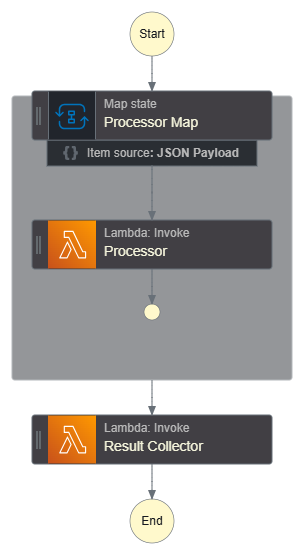
Introducing a Pass state (or a Catch path that routes to a Pass state) next to the processor ensures that each iteration returns a structured result even when an error occurs. This prevents the Map state from failing prematurely. Instead, every iteration produces an output object indicating success or failure, enabling the Result Collector to receive a complete array of results.
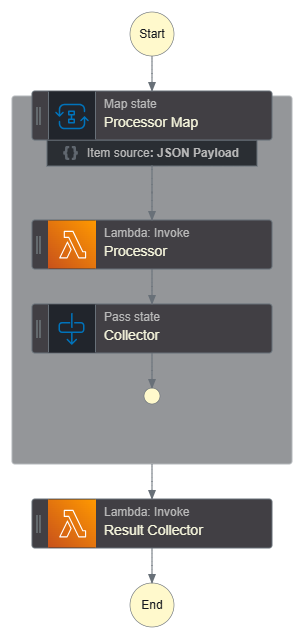
A key drawback of this pattern is that all validation and error-handling logic is deferred to the Result Collector state, which violates separation of concerns. Additionally, during debugging, it can be misleading: the Result Collector may surface as the point of failure, even though the actual errors originated from individual Map state iterations.
If additional states and execution cost are acceptable, adding a dedicated validation state directly after the Map state is a more maintainable approach. This isolates validation logic and prevents the Result Collector from becoming overloaded with responsibilities.
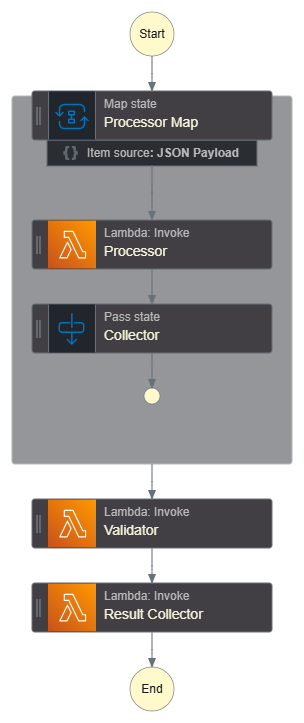
Map states excel at processing array elements independently, regardless of whether the items are JSON, CSV, XML, or any other structure. Preserving isolation between iterations is essential to avoid losing valid results when individual items fail. While this approach can increase workflow complexity, it ultimately provides a more robust and fault-tolerant design.